
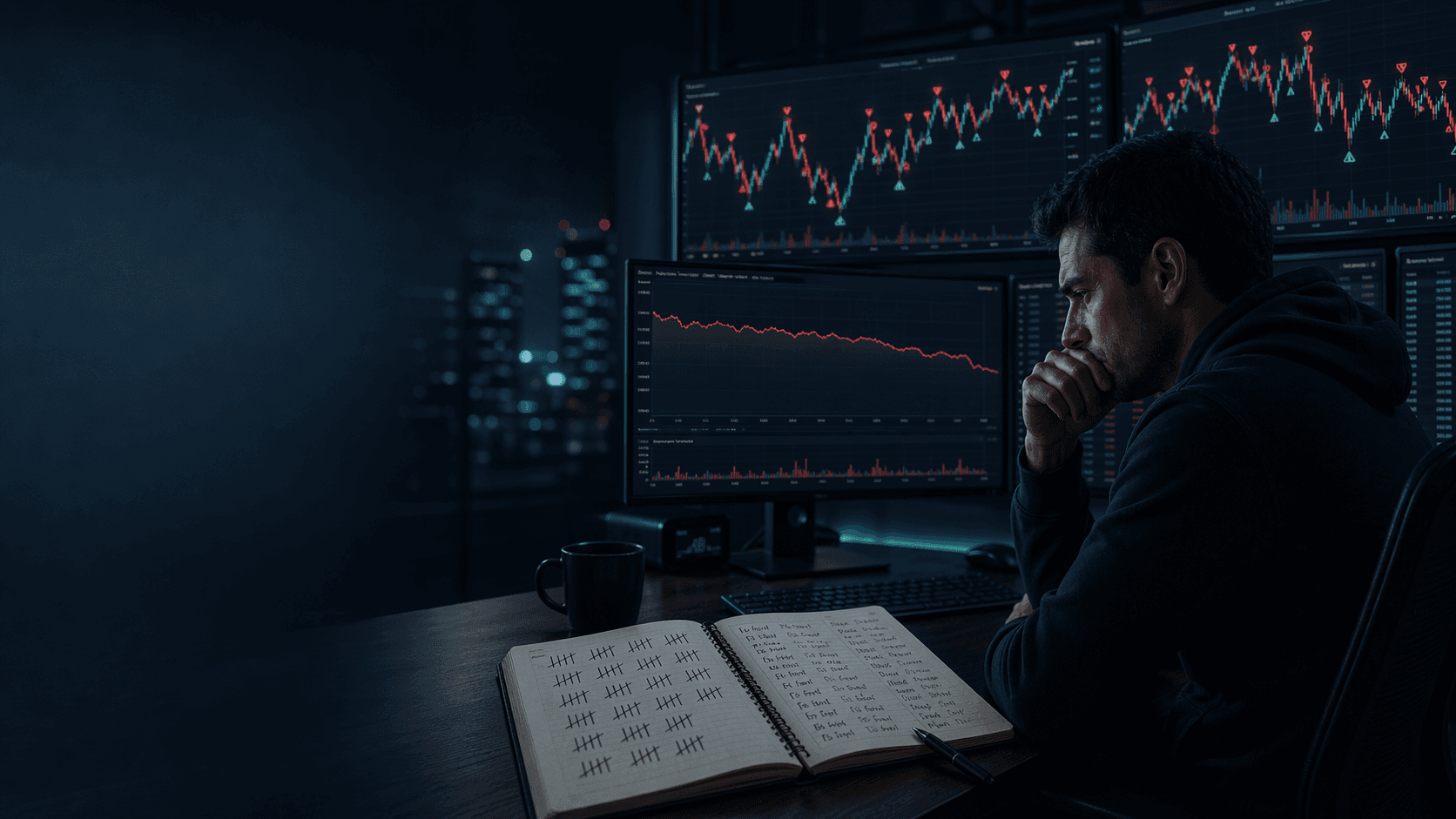
Why More Trades Do Not Always Mean More Progress
Why More Trades Do Not Always Mean More Progress
There is a common belief in trading that more screen time automatically leads to better results.
On the surface, that sounds reasonable.
Experience matters. Repetition matters. Time in the market matters.
But many traders quietly fall into a trap: they confuse more activity with more progress.
And those two things are not the same.
Being busy can feel productive
Trading creates endless opportunities to stay occupied.
You can scan more charts.
Take more setups.
Drop to lower timeframes.
Look for extra entries.
Trade every session.
React to every move.
It feels like work.
It feels like commitment.
It feels like you are doing everything possible to improve.
But more activity is not always better activity.
Sometimes it just creates more noise, more emotional swings, and more chances to make avoidable mistakes.
Many traders are not undertrading. They are overexposing themselves
This is especially common once a trader gains some confidence.
They know how markets move.
They recognise familiar patterns.
They have had enough wins to believe they can read price action well.
That can lead to a subtle shift.
Instead of waiting for clear opportunities, they start feeling they should always be involved.
So they begin:
- forcing setups that are not quite there
- taking lower-quality entries out of impatience
- jumping back in after exits
- trading when conditions are unclear
- increasing frequency without increasing edge
At that point, the issue is no longer lack of opportunity.
It is lack of selectivity.
More trades can hide deeper problems
A high trade count can sometimes disguise what is really happening.
For example:
- a trader with decent edge may dilute performance by taking too many average setups
- a trader with emotional tilt may keep trading to avoid sitting with frustration
- a trader with weak confidence may overtrade in search of reassurance
- a trader with no clear plan may use activity to feel in control
From the outside, it looks like effort.
But underneath, it may actually be avoidance.
Avoidance of patience.
Avoidance of boredom.
Avoidance of self-reflection.
Avoidance of accepting that not every market condition deserves action.
Good traders are often more selective, not more active
This is one of the less glamorous truths about improvement.
As traders mature, many of them do not necessarily trade more.
They often trade better.
That usually means:
- fewer but higher-quality setups
- cleaner risk decisions
- less emotional interference
- more consistency in execution
- better understanding of when not to trade
That last part is a major skill.
Anyone can act when candles are moving fast.
It takes more control to stay out when the opportunity is not really there.
The market does not reward effort alone
This can be a hard lesson.
In many professions, more work usually creates more output.
In trading, that relationship is not always true.
The market does not reward you for how long you stared at charts.
It does not reward how badly you want to make money today.
It does not reward the fact that you took twenty trades instead of three.
It rewards edge, discipline, patience, and risk control.
That is why a trader can work incredibly hard and still underperform.
Not because effort is useless, but because effort without precision can become expensive.
A key question traders should ask
Instead of asking:
"How can I find more trades?"
A more useful question is:
"Which trades actually deserve my risk?"
That changes everything.
Now the focus shifts from quantity to quality.
You stop measuring progress by how involved you were.
You start measuring progress by how disciplined and selective you were.
That is a much healthier standard.
Signs that more trading is hurting rather than helping
A few warning signs tend to repeat:
- your best trades are being diluted by many weak ones
- you often trade out of boredom
- your later trades are worse than your early ones
- your performance drops after the first loss
- you keep looking for action instead of waiting for clarity
- your review shows similar avoidable mistakes repeating across the day
When these patterns appear, the answer is rarely to push harder.
It is often to tighten your framework.
What progress actually looks like
Real progress in trading often looks quieter than people expect.
It may look like:
- skipping a setup you used to force
- stopping after reaching your loss limit
- ending the day after executing well, even if the result was modest
- trading less often but with stronger conviction
- seeing a familiar mistake begin and interrupting it sooner
These are not always exciting moments.
But they are usually the moments that move a trader forward.
This is why review matters so much
Without proper review, overtrading can feel normal.
A trader may simply think:
"I had a busy day."
But the better question is:
- Which trades were actually high quality?
- Which trades were unnecessary?
- Which ones followed the plan?
- Which ones came from emotion, impatience, or fear of missing out?
- What percentage of my activity genuinely reflected edge?
That is where real learning starts.
Final thought
More trades do not automatically mean more learning, more discipline, or more profit.
Sometimes they just mean more exposure to your weaknesses.
Progress in trading is not about always doing more.
Very often, it is about doing less, but doing it with more clarity, more structure, and more intention.
The market will always offer more movement.
Your job is not to capture all of it.
Your job is to recognise which part of it is actually yours.